
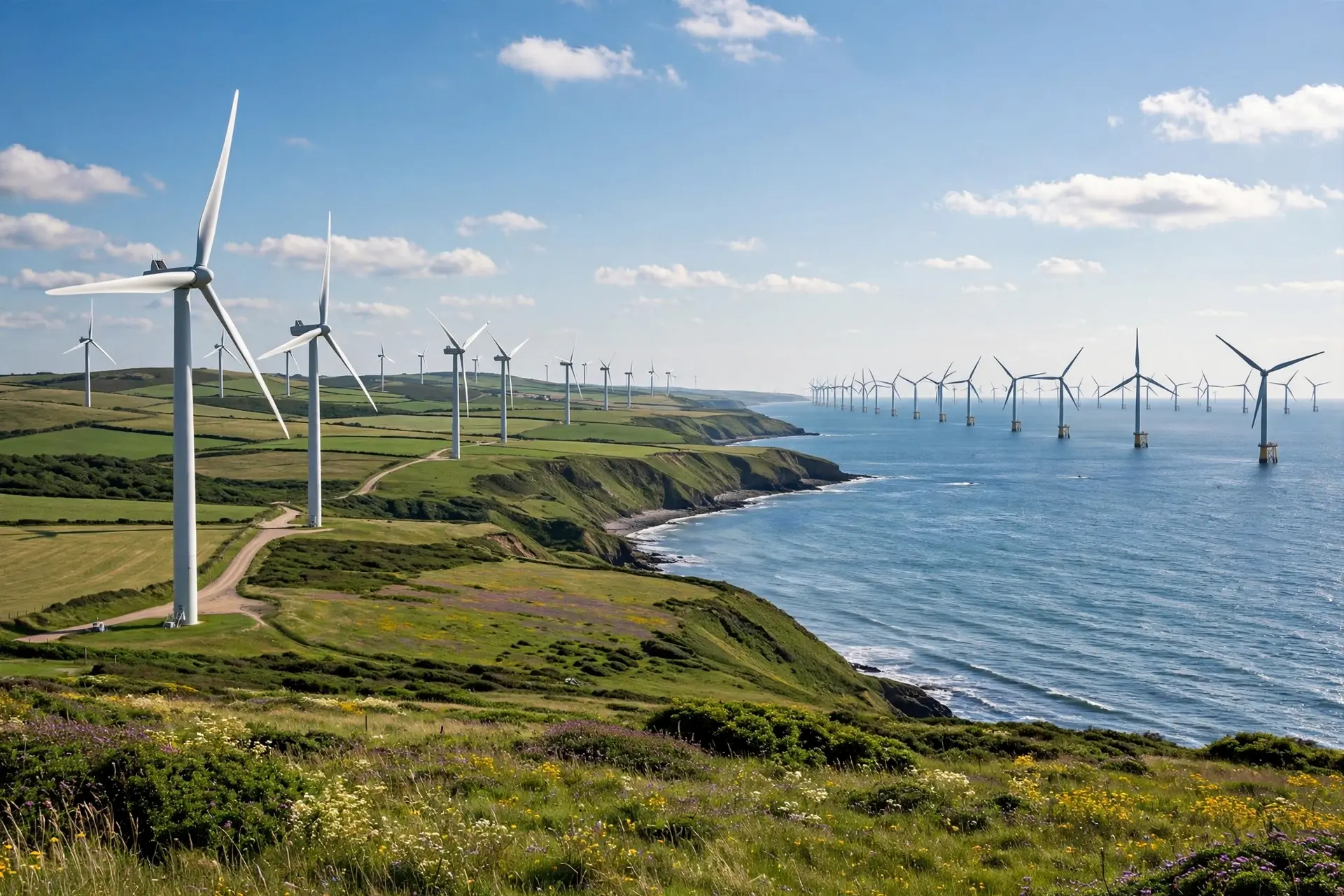
Wind Farm
Enable early fault detection and reduce equipment downtime with real-time condition insights that support proactive maintenance and reliable wind farm operations. Wind farms are a key component of the global transition toward clean and sustainable energy, providing a scalable source of renewable electricity with minimal direct greenhouse gas emissions. Wind turbines convert the kinetic energy of moving air into electrical power, creating an efficient and sustainable alternative to conventional energy generation. Wind farms can operate as centralized or distributed generation systems, with multiple turbines connected through an electrical network comprising transformers, switchgear, cables, substations, and other critical assets. The reliability and performance of these electrical components directly influence turbine availability, power generation, grid stability, and overall operating costs. As turbine capacities increase and wind installations expand into remote and challenging environments, continuous condition monitoring and predictive maintenance become increasingly important for identifying developing faults before they result in costly failures. Wind farms are commonly deployed across different environments and configurations, with onshore installations being among the most widespread. Onshore wind farms are typically located inland, often several kilometers from coastal areas, where they capture terrestrial wind currents and convert them into electricity. These installations are generally more accessible for construction and maintenance and typically deliver generated power to the electrical grid through substations and supporting transmission infrastructure.